The Little Joy of Spotting "Half-Price Stickers" in Japanese Supermarkets
In Japanese supermarkets, there’s a rather unique scene that unfolds from late afternoon into the evening. During what you might call the "last hours before closing," some special activity kicks off in the grocery aisles.
For example, labels like "20% off," "30% off," and even "half-price" start popping up on bento boxes, sushi, and prepared foods. These stickers are placed on items the store wants to clear out that day, giving shoppers a clear signal to pounce on a bargain.
Not everything goes on sale—mainly items that seem less likely to sell by day’s end get marked down. This practice is an important measure to reduce food waste and has become a widely adopted effort to curb unnecessary spoilage.
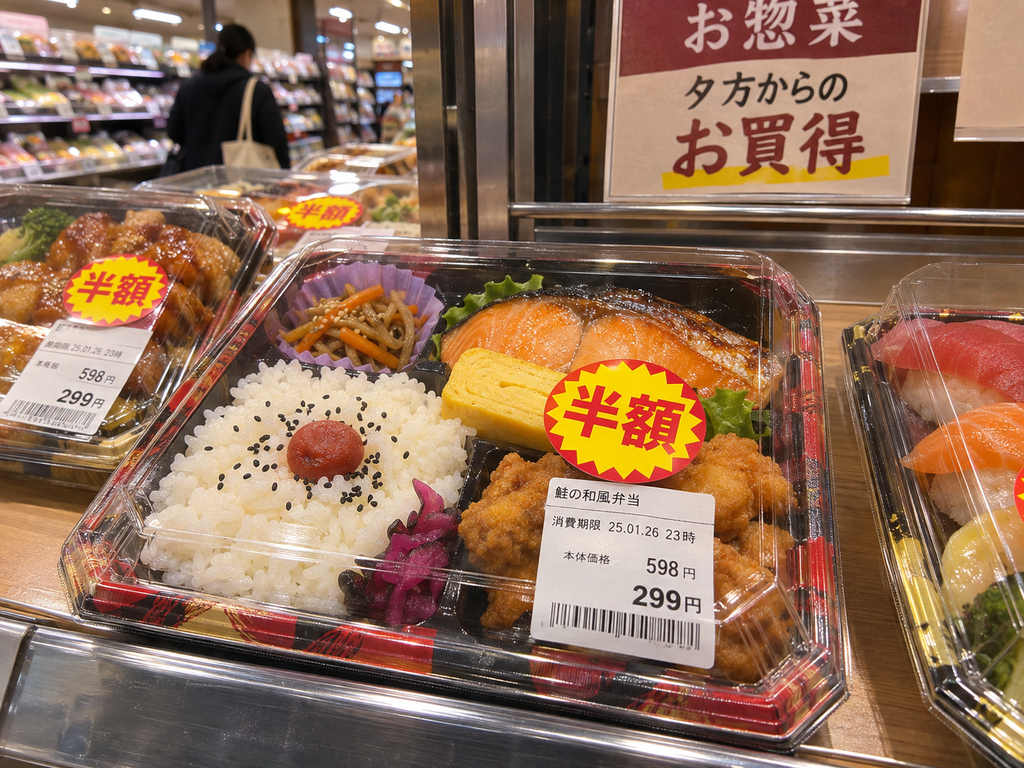
What’s amusing is that some customers actually wait around just for these discount stickers to be applied. At certain stores, when the markdown time begins, crowds gather around the deli section, creating a lively little event. You could say it’s become a charming evening tradition in Japanese supermarkets.
That said, keep in mind that the timing and discount rates vary by store, and “half-price” isn’t guaranteed. Some items never go on sale, and popular products often sell out before any discounts kick in.
These after-work and evening discounts aren’t special occasions in Japan—they’re just a normal part of daily life. People coming home from work, students, homemakers—all sorts of customers routinely take advantage of them as a matter of course.
Recently, with rising awareness about reducing food waste, this system benefits both sellers and buyers and has gained even more importance. When discounted foods are consumed without waste, it helps lower environmental impact as well.
Still, there’s something special about spotting a “half-price” sticker on a bento or ready-made dish you’ve usually bought at full price—it instantaneously feels like a win. It’s like a little treasure hunt, making dinner plans suddenly more fun (laughs).